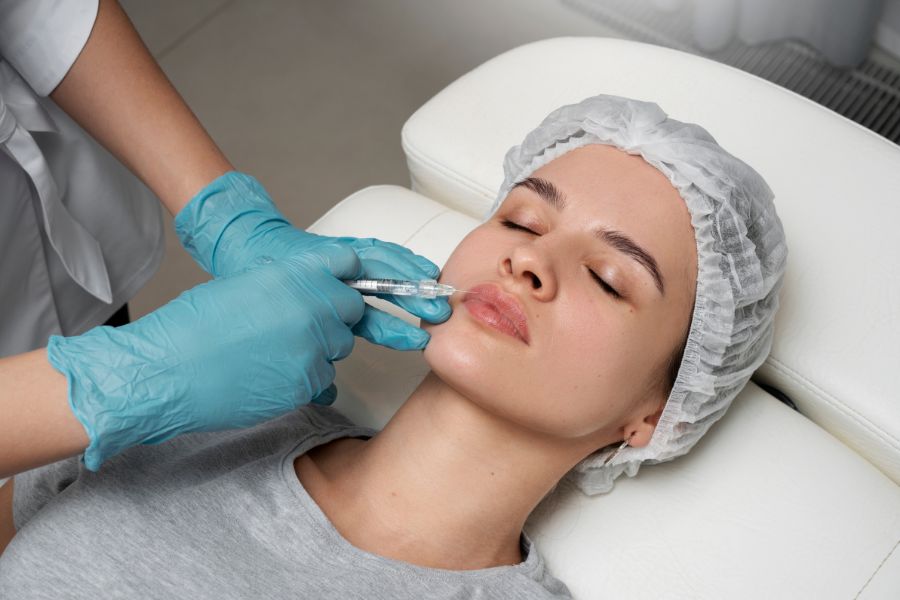
The Complete Guide to Dermal Fillers: Everything You Need to Know

  • Home
  • Beauty
  • The Complete Guide to Dermal Fillers: Everything You Need to Know
Dermal fillers are injectable substances designed to restore facial volume and smooth skin irregularities. These treatments address age-related changes, such as collagen loss, which leads to wrinkles and sagging. Over the past decade, their popularity has risen significantly, with millions of procedures performed annually worldwide. Medical professionals administer them in clinical settings to provide subtle enhancements without the need for surgery.
The appeal of dermal fillers lies in their minimally invasive nature and swift recovery times. Patients often seek them for natural-looking rejuvenation that fits with their lifestyle. Regulatory authorities, such as the MHRA in the UK, approve specific formulations after rigorous testing for safety and efficacy. Understanding their composition and application helps individuals make informed decisions about incorporating them into their skincare routines.
 

Advances in filler technology continue to refine outcomes, with formulations tailored to specific facial zones. Clinical studies demonstrate high patient satisfaction rates, often exceeding 90 per cent for volume restoration. These injectables integrate seamlessly with other treatments, such as lasers or chemical peels, for comprehensive facial renewal. As awareness grows, so does the emphasis on evidence-based practices to maximise benefits. Many people seeking rejuvenation opt for dermal fillers Hornchurch, where experienced practitioners provide tailored treatments for natural results.

Dermal fillers differ from permanent solutions by offering adjustable results through dissolution agents if necessary. Their role in preventive aesthetics encourages earlier intervention against visible signs of ageing. Practitioners monitor long-term effects to ensure sustained skin health. Key aspects include biocompatibility and tissue integration for seamless results.

  • Biocompatibility ensures minimal immune reactions, with hypoallergenic profiles in most formulations.
  • Tissue integration promotes a natural feel, reducing the risk of palpability or migration.
  • Preventive use in early adulthood maintains baseline volume, delaying the need for deeper interventions.
  • Monitoring involves regular assessments to track collagen responses and adjust protocols accordingly.

What Are Dermal Fillers, and How Do They Work?

Dermal fillers are gel-like materials injected beneath the skin to replenish lost volume and reduce the appearance of creases. They mimic natural substances in the body, such as hyaluronic acid, to support structural integrity. Upon injection, the filler integrates with surrounding tissues, providing immediate plumpness and hydration. Over time, some types stimulate collagen production for longer-lasting effects.
The mechanism involves precise placement into the dermal layers using fine needles or cannulas. This displaces tissue to elevate depressed areas and smooth contours. Hyaluronic acid-based fillers bind water molecules, enhancing skin elasticity and moisture retention. Non-hyaluronic variants work by scaffolding or gradual bio-stimulation to encourage natural repair processes.
Clinical administration requires mapping facial anatomy carefully to avoid vital structures, such as blood vessels. Ultrasound guidance is sometimes used to aid accurate delivery and reduce complications. Post-injection, the body metabolises the filler gradually, maintaining results until reapplication. This process contrasts with surgical lifts by preserving natural facial movement.
Research indicates that fillers improve skin quality beyond volume, with increased dermal thickness observed in biopsies. They effectively address both dynamic and static lines. Understanding these interactions informs treatment planning for optimal facial harmony. Patients benefit from personalised dosing to match metabolic rates and lifestyle factors.
  • Osmotic hydration from hyaluronic acid draws fluid, increasing tissue turgor by 20–30 per cent immediately.
  • Viscoelastic support mimics the extracellular matrix, allowing flexibility in expressive areas.
  • Bio-stimulation triggers growth factors such as TGF-beta, elevating collagen by approximately 15 per cent over several months.
  • Metabolic breakdown follows first-order kinetics, with half-lives varying by cross-linking density.

Types of Dermal Fillers

Dermal fillers vary in composition, viscosity, and duration to suit a wide range of needs. Selection depends on treatment goals, from superficial fine lines to deep structural support. MHRA-approved options undergo biocompatibility testing to ensure minimal immune response. Each category offers unique rheological properties for targeted applications.
Manufacturers formulate fillers with cross-linking agents to control degradation rates. This allows layered injections at multiple depths for tailored outcomes. Integration with tissue promotes biocompatibility and reduces migration risks. Ongoing innovations focus on hybrid formulations that combine immediate and regenerative effects.
Practitioners assess skin type and age to recommend the most suitable variant. Combination therapies with multiple filler types enhance results in complex cases. Post-treatment monitoring ensures alignment with expected tissue responses. This diversity enables precise aesthetic corrections.
  • Rheological properties include G’ (storage modulus) for lift and G” (loss modulus) for spreadability.
  • Cross-linking levels range from low for superficial use to high for durability in mobile zones.
  • Hybrid effects blend volumisation with angiogenesis, improving perfusion in treated areas.
  • Biocompatibility testing follows ISO 10993 standards for cytotoxicity and sensitisation.

Hyaluronic Acid (HA) Fillers

Hyaluronic acid fillers derive from a naturally occurring polysaccharide that retains up to 1,000 times its weight in water. Brands such as Juvéderm and Restylane dominate this category, with formulations varying in particle size for superficial or deep placement. They provide instant volume through osmotic hydration and viscoelastic support. Cross-linking with agents such as BDDE extends longevity by resisting enzymatic breakdown.
These fillers excel in dynamic areas due to their soft, malleable consistency. Injection techniques include linear threading for folds or fanning for broader coverage. Reversibility via the hyaluronidase enzyme adds a safety layer, allowing adjustments within hours. Clinical trials show 95 per cent patient satisfaction for lip and cheek enhancements.
HA fillers integrate seamlessly, minimising palpability under thin skin. They also deliver antioxidants to improve dermal health. Maintenance involves touch-ups every six to eighteen months, depending on metabolism. This type suits beginners due to its predictable behaviour and low allergenicity.
  • Particle sizes: Monophasic (smooth) for lips, biphasic (cohesive) for cheeks.
  • Cross-linking agents: BDDE in Juvéderm, divinyl sulfone in some Restylane variants.
  • Reversibility: Hyaluronidase doses are 15–30 units per 0.1 mL, with effect in 24–48 hours.
  • Antioxidant delivery: Lidocaine inclusion reduces pain, with some formulas adding mannitol for stability.

Calcium Hydroxylapatite Fillers

Calcium hydroxylapatite (CaHA) fillers, such as Radiesse, suspend microspheres in a gel carrier for both immediate and stimulatory effects. The calcium-based particles mimic bone minerals, providing robust lift in midface and jawline regions. As the gel dissipates, microspheres trigger fibroblast activity, boosting collagen over three months, resulting in gradual firming without overcorrection.
Viscosity suits deeper injections, offering structural support against gravity-induced descent. Cannula delivery reduces vascular risks in high-mobility zones. MHRA clearance covers nasolabial folds and cheek augmentation, with off-label uses in hands and décolletage. Durations average twelve to eighteen months, depending on injection depth.
Histological analyses reveal neocollagenesis around microspheres, enhancing tissue quality. The non-reversible nature demands precise dosing to avoid nodules. Providers favour CaHA for patients seeking longevity without frequent visits. Integration with HA fillers creates hybrid lifts for comprehensive rejuvenation.
  • Microsphere size: 25–45 microns, optimal to avoid phagocytosis.
  • Gel carrier: Carboxymethylcellulose metabolises in 2–4 weeks.
  • Collagen boost: Type I and III fibres increase by 30 per cent at six months.
  • Off-label applications: Vocal cord medialisation and urinary incontinence treatments.

Poly-L-Lactic Acid Fillers

Poly-L-lactic acid (PLLA) fillers, such as Sculptra, function as collagen biostimulators rather than pure volumisers. Administered in diluted suspensions over multiple sessions, PLLA microparticles induce a foreign body response, prompting fibroblasts to release growth factors. This cascades into extracellular matrix deposition over weeks, with results building subtly and peaking at four to six months.
Dilution protocols ensure even dispersion, with post-injection massage preventing aggregation. MHRA-approved for cheek and temple hollows, PLLA addresses pan-facial atrophy effectively. Sessions are spaced three to four weeks apart, with one to three vials per treatment. Longevity reaches two years through sustained neocollagenesis.
  • Dilution ratios: 5–9 mL bacteriostatic water per vial for facial use.
  • Massage protocol: Five-minute sessions, five times daily for five days post-injection.
  • Growth factors induced: PDGF, VEGF, enhancing vascularity by 25 per cent.
  • Vial contents: 367.5 mg PLLA, with lidocaine for comfort in newer formulations.

Polymethylmethacrylate (PMMA) Fillers

Polymethylmethacrylate (PMMA) fillers, such as Bellafill, feature permanent microspheres suspended in bovine collagen gel. The initial gel provides volume, degrading over one month to leave PMMA for enduring support. Collagen encapsulation forms around the spheres, integrating as an autologous scaffold. MHRA approval targets nasolabial folds, with acne scar data supporting wider use.
Microsphere size under 20 microns prevents phagocytosis and migration. Injection requires deep dermal or subdermal placement. Pre-treatment allergy testing mitigates bovine collagen reactions. Durations exceed five years, with 80 per cent persistence at eighteen months per studies.
  • Microsphere composition: 20 per cent PMMA in 80 per cent collagen gel.
  • Allergy testing: Intradermal bovine collagen four weeks prior; positive in 3 per cent.
  • Encapsulation time: Fibroblast layering completes in 1–3 months.
  • Acne scar efficacy: 64 per cent improvement at 12 months.

Autologous Fat Injections

Autologous fat injections harvest adipose tissue via liposuction, process it through centrifugation, and reinject it for volume restoration. This natural filler leverages stem cells within fat for regenerative benefits, improving skin texture via adipokine release. Techniques like Coleman’s structural fat grafting ensure viability through microdroplet placement. Sessions yield 50–70 per cent retention after initial resorption.
  • Centrifugation speed: 3,000 rpm for three minutes to separate layers.
  • Microdroplet size: 0.1–0.3 mL per pass for oxygenation.
  • Stem cell content: 10–20 per cent ADSCs, promoting paracrine signalling.
  • PRP adjunct: Centrifuged at 1,500 rpm, yielding 4–6× platelet concentration.

Common Areas Treated with Dermal Fillers

Dermal fillers target areas prone to volume depletion due to ageing or genetics. The midface and perioral regions are often affected first, prompting targeted restoration. Anatomical mapping guides placement, respecting lymphatic drainage and muscle dynamics. Multi-site approaches harmonise proportions for balanced facial profiles.
Selection considers tissue thickness and mobility, with superficial fillers for lips and deeper injections for structural contours. Ultrasound visualisation aids precision in delicate areas. Post-treatment symmetry checks confirm even distribution. This strategic approach maximises both functional and aesthetic outcomes.
Patient education regarding zonal interactions fosters realistic expectations. Seasonal variations in swelling influence timing, while integration with neuromodulators refines expressions. Advanced mapping continues to evolve with 3D imaging technologies.
  • Lymphatic drainage patterns: prezygomatic for midface, mandibular for lower.
  • Muscle dynamics: Zygomaticus for smile lines, mentalis for chin puckering.
  • 3D imaging tools: Vectra systems for volumetric simulations.
  • Seasonal timing: Avoid summer heat to minimise persistent oedema.

Lips

Lips lose projection and definition with age, as vermilion borders thin and philtral columns flatten. HA fillers restore Cupid’s bow and lip body using retrograde threading for even augmentation. Volumes typically range from 0.5 to 2 mL, titrated to natural ratios such as 1:1.6 upper-to-lower. Cannula entry minimises vascular risks in this highly vascular zone.
Results enhance speech and sensation without stiffness, lasting six to twelve months. Overfilling risks a “duck-lip” deformity, avoided through conservative layering. Pre-treatment numbing ensures comfort, with arnica mitigating bruising. Studies indicate 85 per cent patient satisfaction for hydration and lip enhancement.
Combination with Botox softens perioral lines for a seamless rejuvenation. Ethnic considerations adapt volumes to fuller native structures. Maintenance aligns with metabolic rates, which are faster in smokers. This zone’s responsiveness makes it a popular entry point for first-time patients.
  • Injection techniques: Retrograde linear for borders, bolus for lip body.
  • Volume ratios: Golden ratio 1.618 for ideal proportions.
  • Vascular safeguards: Angular artery avoidance via lateral entry.
  • Ethnic adaptations: 20–30 per cent less volume in Asian lips for subtlety.

Cheeks and Midface

Cheeks and midface deflate early, causing tear trough hollows and deepening of nasolabial folds. Volumetric fillers such as Voluma restore malar prominence with submuscular fanning. Two to four syringes address the pyramid base, indirectly lifting jowls. CaHA variants provide scaffolding for sustained lift.
Durations can extend to 24 months with collagen induction. Pre-procedure marking delineates zygomatic arches for symmetry. Compression garments post-injection stabilise placement. Clinical outcomes report 90 per cent improvement in youthful contour restoration.
Layering HA over PLLA combines immediate volumisation with regenerative benefits. Gender-specific dosing generally favours higher volumes in males for angularity. Metabolic factors shorten results in highly active individuals. This central zone is critical for overall facial harmony.
  • Fanning technique: 45-degree angles for even dispersion.
  • Syringe counts: 2 mL per side for moderate volume loss.
  • Gender dosing: Males require 1.5× female volumes for bone prominence.
  • Lift mechanism: Indirect jowl elevation via midface support.

Under-Eye Area

The under-eye area treats tear trough deformities caused by orbital fat herniation and loss at the lid-cheek junction. Low-viscosity HA fillers such as Belotero fill hollows via microbolus, improving light reflection. Volumes under 1 mL prevent the Tyndall effect, a bluish hue from superficial placement. Cannulas access from temporal or malar entry to protect the angular artery.
Results last nine to twelve months, with bruising common due to thin dermis. Pre-treatment hydration enhances tissue plumpness for accurate assessment. Cold compresses reduce oedema. Patient satisfaction reaches 88 per cent for achieving a rested appearance.
Hyaluronidase can address overcorrection swiftly. Contraindications include active allergies or a history of keloid formation. Combination with PRP accelerates healing. Expert technique is essential in this delicate area.
  • Microbolus volumes: 0.1–0.2 mL per site.
  • Tyndall prevention: Supraperiosteal placement at 3–4 mm depth.
  • Cannula gauge: 27G for minimal trauma.
  • PRP synergy: a 1:1 mix reduces bruising by 40 per cent.

Jawline and Chin

Jawline and chin fillers define V-shaped contours, countering resorption at the mentum and gonial angles. High-G HA or CaHA provides projection via linear injections along the mandible. One to three syringes sculpt from the masseter to the pogonion, enhancing facial symmetry. Volux formulations withstand mastication forces.
Effects persist for 12–18 months, with males often requiring denser support. Pre-op cephalometrics guide harmonious proportions. Numbing creams facilitate tolerance. Studies report 92 per cent patient approval for enhanced profile definition.
Combination with Botox relaxes masseters for a slimmer appearance. Bone quality assessments predict long-term stability. Irreversible fillers like PMMA may be suitable for permanent definition. 3D simulations can preview outcomes.
  • Linear injection: Parallel to bone at 4–6 mm depth.
  • Gonial angle enhancement: 1 mL per side.
  • Botox combo: 20–30 units per masseter for hypertrophy reduction.
  • Cephalometric ratios: Menton to gonion 1:1 for balance.

Nasolabial Folds and Marionette Lines

Nasolabial folds and marionette lines deepen from repetitive facial expressions and midface descent. Medium-viscosity HA smooths these folds via cross-hatching, bridging depth. 1.5–3 mL per side restores levator support. PLLA sessions can rebuild structural scaffolding over time.
Longevity averages nine–15 months, with fanning reducing lumpiness. Topical anaesthetics precede multi-puncture entries. Patients report 87 per cent satisfaction for smoother transitions to the cheeks.
  • Cross-hatching pattern: Perpendicular lines for depth.
  • Fanning volume: 0.3 mL passes for diffusion.
  • PLLA sessions: 2–3 spaced four weeks apart.
  • Histological change: Epidermal turnover increases 15 per cent.

Benefits of Dermal Fillers

Dermal fillers restore youthful contours by replenishing subcutaneous fat pads depleted with age. They smooth static wrinkles without altering muscle function, preserving facial expressiveness. Hydration from HA variants improves skin barrier function, reducing transepidermal water loss. Biostimulatory fillers enhance elasticity through collagen stimulation.
Non-surgical delivery minimises scarring and anaesthesia risks compared with implants. Quick procedures fit busy schedules, with most patients resuming normal activities on the same day. Customisable volumes allow incremental enhancements, avoiding overdone appearances. Psychological benefits include improved self-esteem, with surveys showing 80 per cent of patients reporting enhanced confidence.
Fillers are versatile across ethnicities, adapting to diverse skeletal frameworks. Preventive use in the thirties can delay the need for surgery by several years. Synergy with topical treatments enhances skin radiance. Cost-effectiveness is notable, with HA fillers averaging £1–2 per day of visible effect.
  • Volume restoration: Counters 20–30 per cent age-related fat loss.
  • Wrinkle reduction: Static lines soften by approximately 70 per cent.
  • Hydration boost: TEWL decreases 25 per cent post-injection.
  • Self-esteem gains: 75 per cent report increased confidence.
  • Preventive efficacy: Delays surgical intervention by 5–7 years.

Dermal Fillers vs. Other Aesthetic Treatments

Dermal fillers provide volumetric support rather than surface resurfacing, unlike lasers. Thread lifts offer mechanical anchorage, whereas fillers act as chemical scaffolds. Radiofrequency devices contract the dermis, while chemical peels exfoliate superficially. Surgical facelifts achieve maximal lift but require extended recovery. Fillers often bridge gaps during maintenance phases and complement other treatments.
Combination treatments, such as fillers with Botox, show high patient satisfaction. Cost-benefit ratios vary according to downtime tolerance and treatment goals.
  • Laser comparison: CO₂ resurfacing for scars, fillers for hollows.
  • Thread lifts: PDO threads for suspension, fillers for volume.
  • RF devices: Microneedle RF tightens, fillers plump.
  • Chemical peels: TCA for pigmentation, fillers for folds.
  • Synergy: 4.5/5 satisfaction for Botox-filler combination.

Dermal Fillers vs. Botox

Dermal fillers add volume to static folds, whereas Botox relaxes dynamic lines caused by muscle contraction. Fillers act immediately, while Botox peaks at 14 days. Durations are typically six–24 months for fillers versus three–four months for Botox.
  • Static vs. dynamic: Fillers for at-rest lines, Botox for motion lines.
  • Onset times: Fillers are immediate, Botox 3–7 days.
  • Depth: Fillers 2–5 mm, Botox 1–3 mm intramuscular.
  • Cost ratio: Fillers £450–600 per syringe, Botox £8–12 per unit.
  • Combined use reduces total units by 20 per cent while improving outcomes.

Who Is a Good Candidate for Dermal Fillers?

Ideal candidates show mild to moderate volume loss without severe laxity requiring surgery. Ages range from the mid-twenties for prevention to seventies for restoration. Good health, absence of autoimmune disorders, and realistic expectations are essential. Non-smokers and individuals with controlled skin conditions typically respond best.
Contraindications include pregnancy, breastfeeding, active infections, or severe allergies. Psychological readiness ensures motivation stems from self-enhancement rather than external pressures. Prior successful filler treatments predict better outcomes.
  • Age: 25–35 preventive, 40–60 restorative, 65+ maintenance.
  • Health exclusions: uncontrolled diabetes, active cancer.
  • Lifestyle positives: Non-smokers, low UV exposure.
  • BMI adjustments: Under 20 requires 20 per cent less volume.

The Dermal Filler Treatment Process

The process begins with a detailed consultation, including medical history, facial mapping, and consent. Practitioners document allergies, medications, and prior procedures. Sterile protocols are strictly observed. Patient positioning optimises access and comfort.

Consultation and Assessment

Facial analysis under neutral lighting identifies deficits. Digital morphing visualises potential outcomes. Pinch tests assess elasticity, and photography establishes baselines. Allergy testing and vascular mapping prevent complications.
  • Lighting: 500 lux neutral white.
  • Morphing software: Crisalix 3D previews.
  • Pinch test: 1–2 cm lift for laxity grading.
  • Doppler: Identifies infraorbital artery flow.

Injection Procedure

Antiseptic preparation and topical numbing precede injections. Fine needles (27–30G) or cannulas (25G) deliver fillers. Aspiration checks prevent intravascular injection. Layered deposition from deep to superficial ensures stability.
  • Numbing: Lidocaine 4% cream.
  • Gauge selection: 30G for lips, 25G cannula for cheeks.
  • Aliquot size: 0.1 mL increments.
  • Ultrasound: 15 MHz for superficial zones.

Post-Treatment

Immediate care includes ice application and elevation to reduce oedema. Oral analgesics manage discomfort. Follow-up at one and four weeks monitors outcomes, and adjustments are made if necessary.
  • Ice: 10 min on/off cycles for 1 hour.
  • Analgesics: Paracetamol 500 mg as required.
  • Follow-up: Swelling scale and symmetry scores.

What to Expect After Dermal Filler Treatment

Mild erythema and swelling peak at 24 hours, resolving within 3–7 days. Bruising fades naturally over 7–10 days. Makeup can resume after 48 hours, and hydration supports recovery. Sensory changes are typically temporary.
  • Erythema: 24–72 hours.
  • Purpura fade: 7–10 days.
  • Numbness: Perioral resolves fastest.
  • Hydration: 2–3 litres daily.

How Long Do Dermal Fillers Last?

Duration varies: HA fillers 6–18 months, CaHA 12–18 months, PLLA up to 2 years, PMMA 5+ years, and fat grafts 1–10 years. Longevity depends on metabolic rate, injection site, and product type.
  • HA: 6–18 months (hydration binding).
  • CaHA: 12–18 months (collagen stimulation).
  • PLLA: Up to 2 years (fibroblast activation).
  • PMMA: 5+ years (permanent microspheres).
  • Fat: 1–10 years (graft viability).

Safety, Risks, and Side Effects

Fillers are generally safe when administered by qualified professionals. Common side effects include bruising (20–30 per cent) and mild swelling. Rare complications include vascular occlusion (0.048 per cent) and allergic reactions. Proper technique, anatomical knowledge, and emergency preparedness minimise risks.
  • Bruising: 24 per cent, peaks on day 2.
  • Occlusion management: Hyaluronidase 150–300 units immediately.
  • Granuloma treatment: Triamcinolone 10 mg/mL.
  • MAUDE database: 0.02 per cent blindness (2018–2023).

Choosing a Qualified Dermal Filler Provider

Providers should hold board certifications in dermatology or plastic surgery, with injectables fellowships preferred. Experience with over 500 cases annually and accredited facilities ensures safety. Peer reviews, before-and-after galleries, and complication logs aid in selecting reputable practitioners.
  • Verify licensure with regulatory boards.
  • Review gallery for natural results.
  • Assess follow-up and emergency protocols.
  • CME: 20+ hours annually in injectables.

Cost of Dermal Filler Treatments

HA fillers range from £450 to £600 per syringe; PLLA is £900–1,300 per vial. Multi-site sessions may cost £1,200–4,500, depending on location, provider expertise, and maintenance frequency. Package deals often offer 10–15 per cent savings. Insurance generally excludes cosmetic procedures.
  • Provider prestige: +10–20 per cent.
  • Volume: More syringes increase cost.
  • Location: Urban premiums 20–30 per cent.
  • Package savings: 10 per cent for three or more sessions.

Conclusion

Dermal fillers are a cornerstone of modern aesthetics, providing versatile solutions for facial volume and contour. Their evolution from basic gels to biostimulators reflects ongoing innovation. Informed choices, guided by science, yield long-lasting satisfaction. Future integration with biologics promises even more refined outcomes.

Leave A Comment

Your email address will not be published. Required fields are marked *