- 79 Station Ln, Hornchurch, RM12 6JU
- 01708 607930
- info@charismabeautylounge.co.uk


Face threading has become one of the most popular hair removal methods, especially for those seeking a precise, gentle, and effective solution to remove facial hair. Whether you’re interested in shaping your eyebrows or removing hair from your upper lip or chin, threading offers a safe and efficient technique. It provides a range of benefits that make it an appealing choice.
Unlike waxing or tweezing, threading doesn’t use harsh chemicals or heat, making it suitable even for sensitive skin. The method involves using a twisted cotton thread to lift hair directly from the follicle, ensuring a clean finish and longer-lasting results compared to shaving. Many people prefer threading for its accuracy, especially when it comes to creating defined eyebrow shapes.
If you’re searching for professional services, opting for threading in Hornchurch can be a great choice. Local beauty salons in Hornchurch often specialize in threading, offering clients expert care and precise results in a comfortable setting. With skilled technicians, you can enjoy smooth, well-shaped brows and flawless skin, all while supporting trusted local professionals.
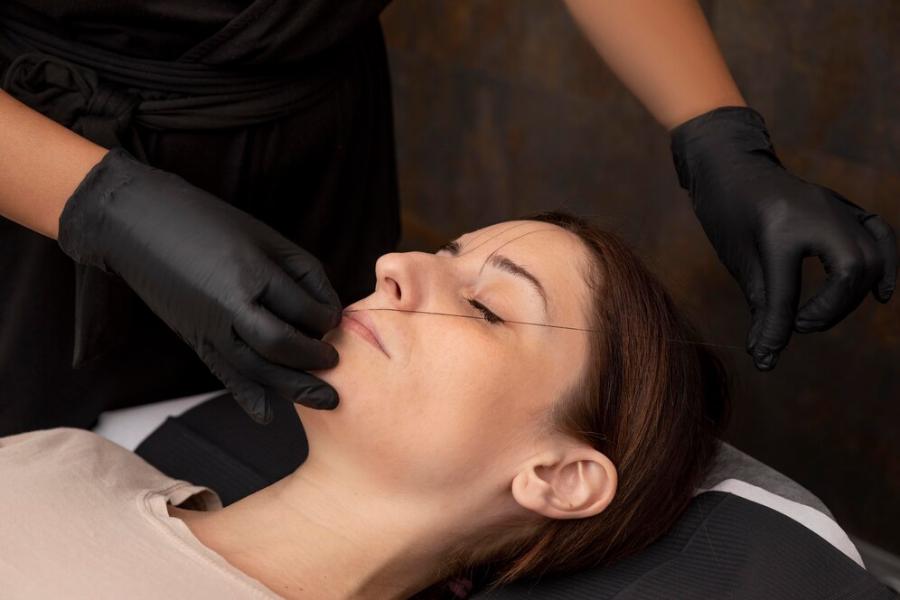
Face threading is a traditional hair removal technique that uses a twisted cotton thread to capture and remove unwanted hair. This method is particularly effective on the face, where precision is key. Threading is ideal for shaping eyebrows, removing hair from the upper lip, chin, and cheeks, and achieving a smooth, hair-free face. Unlike other hair removal methods, threading doesn’t involve the use of chemicals, wax, or heat, making it an excellent option for those with sensitive skin.
The process is simple: a piece of cotton thread is twisted and rolled over the area, trapping hairs and pulling them out from the root. This results in clean, well-defined lines, making it a preferred method for eyebrow shaping and other facial areas that require precision.
Threading has ancient roots, with a rich history dating back more than 6,000 years. It is believed to have originated in India and the Middle East, where it was traditionally used by women to remove unwanted facial hair. In these cultures, threading was not just a beauty ritual but also a rite of passage for young girls coming into adulthood.
Over time, the practice spread to other parts of the world, particularly in Southeast Asia and the Middle East, before gaining widespread popularity in Western countries. Today, threading is considered a staple in beauty salons worldwide, known for its precision and ability to create sharp, defined shapes on the face. If you’re new to this method, understanding eyebrow threading basics is a great place to start, especially for achieving clean, symmetrical brows with minimal discomfort.
One of the key benefits of threading is its ability to remove individual hairs with great accuracy. Unlike waxing or shaving, threading allows you to shape eyebrows, remove facial hair, and target small areas with precision. This makes it perfect for creating clean, sharp lines around the brows or upper lip.
Threading is a natural method of hair removal that doesn’t require the use of chemicals or heated wax. For individuals with sensitive skin or those prone to allergic reactions, this makes it an excellent option. It’s gentle on the skin and won’t cause irritation or adverse reactions.
Since threading removes hair from the root, the results are longer-lasting compared to other methods like shaving or depilatory creams. Typically, the hair will not grow back for 3–6 weeks, depending on your hair growth cycle. This is much longer than shaving, which requires frequent touch-ups.
Unlike waxing, which can pull and stretch the skin, threading is much gentler on the face. There’s no risk of burns or scarring, making it a safer option for delicate skin. Additionally, since the hair is removed from the root, threading reduces the likelihood of ingrown hairs, a common issue with other hair removal methods.
Threading is an ideal solution for people with sensitive skin. Unlike waxing or shaving, which can lead to redness, bumps, or irritation, threading is a gentle technique that targets only the hairs, leaving the skin intact. It’s also less likely to cause breakouts or allergic reactions, which is why many people with sensitive skin prefer it.
When it comes to removing facial hair, you have a variety of options. Here’s how threading compares to other popular hair removal methods:
To start, a piece of cotton thread is sterilized and cut to a manageable length. The thread is then tied in a loop, and the middle portion is twisted 8–10 times to create a twisted section in the centre.
The technician or individual performing the threading will hold the loop in both hands and position the twisted section of thread over the area to be treated. The twisting action allows the thread to catch the hair and pull it out.
By opening and closing the fingers, the technician creates a motion that moves the twisted thread back and forth over the skin. As the thread moves, it grabs and removes the unwanted hair from the root.
The threading process is repeated over the target area until all unwanted hair is removed.
Threading can be performed on various facial areas:
Proper preparation ensures that threading is more effective and comfortable:
Before threading, cleanse your face to remove any makeup, oils, or dirt. Clean skin ensures that the threading process is more efficient.
Exfoliating your skin a day before threading helps remove dead skin cells, making it easier for the thread to catch and remove hair.
Moisturizers can make the threading less effective because they create a slippery surface for the thread. It’s best to skip applying any creams or lotions right before the session.
Tension can make threading more painful, so try to relax and breathe deeply during the process. This will also make it easier for the technician to perform the threading efficiently.
To keep your skin looking and feeling great after threading, follow these aftercare tips:
To ensure the best results from face threading, here are some common mistakes to avoid:
While it’s possible to thread at home, it’s not recommended for beginners. Threading requires technique, precision, and practice to do it safely without causing irritation or injury. If you do decide to try threading at home, ensure you use the correct type of thread, follow proper hygiene practices, and start with small areas like your eyebrows or upper lip.
When you visit a professional for threading, you can expect a few things:
Face threading is an effective, precise, and safe method of hair removal that’s perfect for those looking to remove facial hair with minimal irritation. Whether you’re shaping your eyebrows, removing upper lip hair, or simply seeking a smooth face, threading offers a natural and gentle solution. By following proper preparation, and aftercare, and avoiding common mistakes, you can enjoy smooth, hair-free skin for weeks to come.
Yes, face threading is good for the face as it gently removes hair from the root without using chemicals or heat. It’s ideal for sensitive skin and offers precise results, making it a popular choice for shaping eyebrows and removing facial hair.
The downside of face threading is that it can cause temporary redness, irritation, or mild discomfort, especially if you have very sensitive skin. In rare cases, improper technique may lead to minor cuts or ingrown hairs.
Threading requires skill, and if not done correctly, it can cause skin irritation or breakouts. It might also be slightly painful for some, and results may vary depending on hair texture and skin type.
Recent Posts




WhatsApp us