- 79 Station Ln, Hornchurch, RM12 6JU
- 01708 607930
- info@charismabeautylounge.co.uk


In the last decade, non-surgical skin rejuvenation has evolved from a luxury to a mainstream option for people who want visible improvement without major surgery. Advances in technology, better understanding of skin biology, and safer protocols have expanded the menu of professional treatments. Today’s options include mechanical procedures, chemical therapies, energy-based devices, and injectables, each with its own mechanism, benefits, limits, and suitability. Whether you’re exploring microneedling in Hornchurch or comparing other advanced facial treatments, choosing between them means understanding not only what results you want, but also how each treatment works, how your skin will respond, and what trade-offs (downtime, cost, risks) you’re willing to accept.
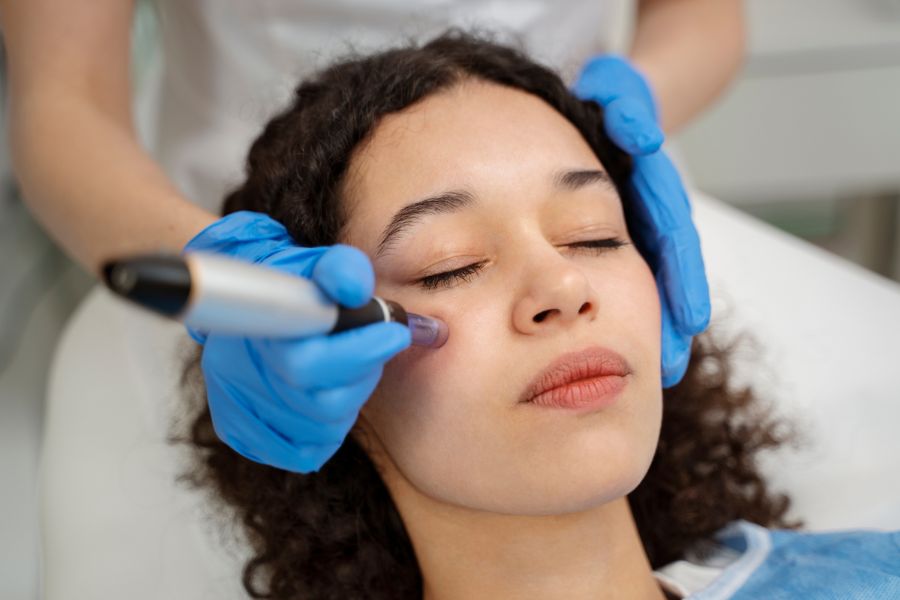
Microneedling—also called collagen induction therapy—uses tiny, controlled micro-injuries to the skin to trigger the body’s natural wound-healing cascade. Those micro-injuries are created with needles (manual dermarollers, motorised pens, or medical devices) that penetrate the stratum corneum and reach the epidermis and superficial dermis.
How the process produces results:
Key points:
Skin Concerns Microneedling Can Address
Microneedling is versatile and commonly used for:
Microneedling is generally suitable for a wide range of skin tones because it is mechanical rather than thermal and therefore carries a lower risk of provoking pigmentary changes — provided it’s performed correctly.
For each comparison below, we cover what the other treatment does, how it differs mechanistically from microneedling, the typical benefits and limitations, and practical guidance on who is a better candidate for which treatment.
Microneedling vs Chemical Peels
What chemical peels do
Mechanistic difference
Benefits and limitations
Who should choose which
Microneedling vs Microdermabrasion
What microdermabrasion does
Mechanistic difference
Benefits and limitations
Who should choose which
Microneedling vs Laser Resurfacing
What laser resurfacing does
Mechanistic difference
Benefits and limitations
Who should choose which
Microneedling vs Radiofrequency (RF) Microneedling
What RF microneedling does
Mechanistic difference
Benefits and limitations
Who should choose which
Microneedling vs Dermal Fillers and Botox
What injectables do
Mechanistic difference
Benefits and limitations
Who should choose which
Selecting the most effective treatment starts with a clear definition of the goal. Below is a practical mapping to help you decide.
For Anti-Ageing and Wrinkle Reduction
For Acne Scars and Texture Correction
For Pigmentation and Sun Damage
For Hydration and Instant Glow
Skin Type and Sensitivity
Downtime and Lifestyle
Treatment Safety and Practitioner Expertise
Cost vs Long-Term Results
Natural Collagen Boost Without Harsh Chemicals
Gradual, Long-Lasting Skin Transformation
Compatible with Other Treatments (Combination Therapy)
Minimal Downtime, Visible Progress
Pre-Treatment Preparation
The Procedure Step-by-Step
Post-Treatment Care
Combining treatments can produce synergistic outcomes when done with an evidence-based plan and appropriate spacing.
Microneedling + PRP (Platelet-Rich Plasma)
Microneedling + LED Therapy
Microneedling + Chemical Peels
Microneedling is safe for many, but there are essential contraindications:
For anyone with contraindications, gentler alternatives (LED, HydraFacial, low-strength peels, or topical protocols) may be safer interim options.
To sustain results and optimise skin health, microneedling should be part of a long-term strategy rather than a single fix.
Suggested maintenance framework
Monitoring progress
Microneedling occupies a powerful middle ground in the aesthetic toolkit: it is less aggressive than deep ablative lasers, more structurally corrective than superficial facials or microdermabrasion, and complementary rather than competitive with injectables. Its strengths lie in stimulating the body’s natural repair systems to rebuild collagen and improve texture, with relatively low downtime and broad suitability across skin tones.
When choosing a treatment:
With the right evaluation and an evidence-based plan, microneedling can be one of the most effective, natural-feeling choices for long-term skin improvement. It’s not a cure-all, but for many concerns — especially scarring and texture — it’s a cornerstone procedure that pairs well with other targeted therapies.
Recent Posts




WhatsApp us